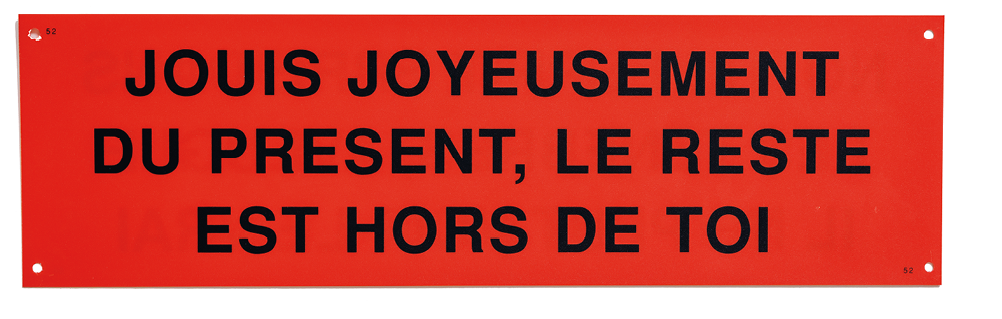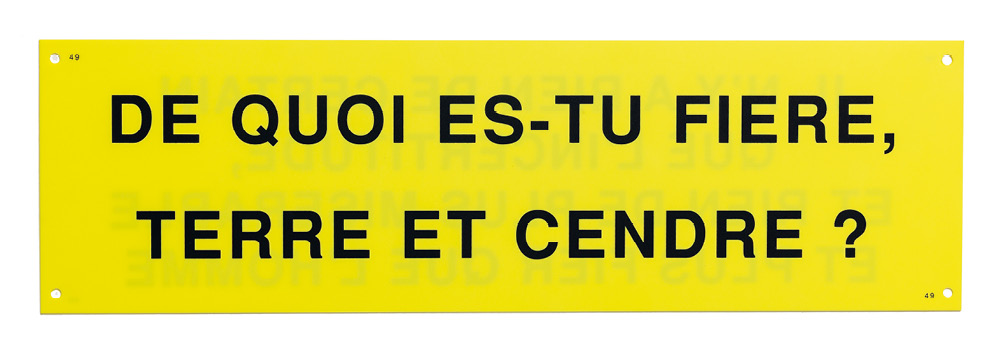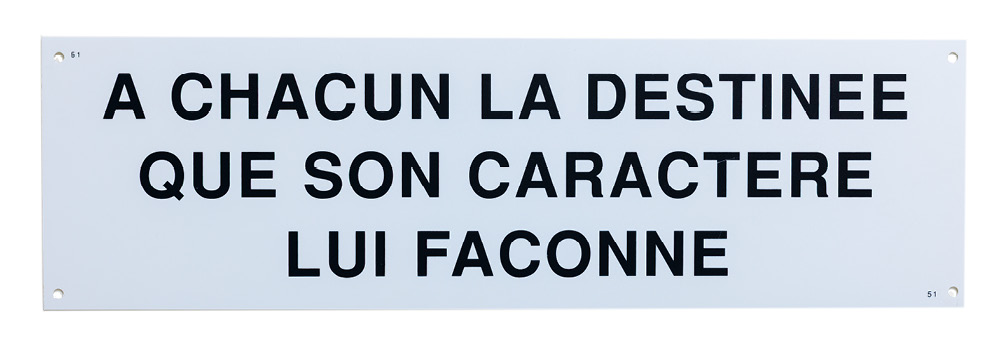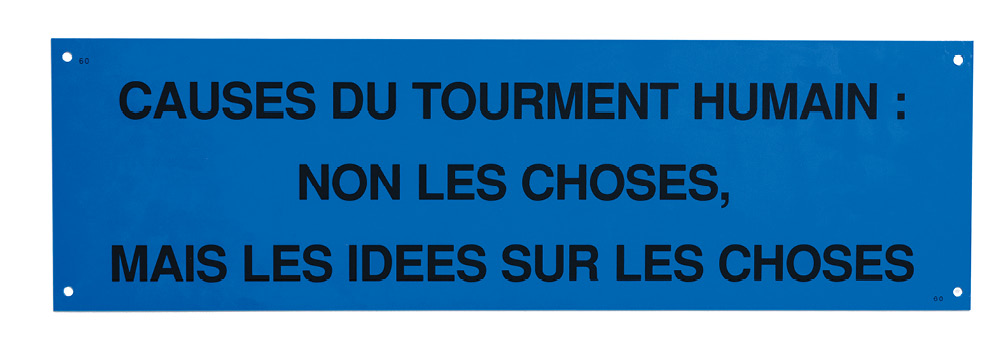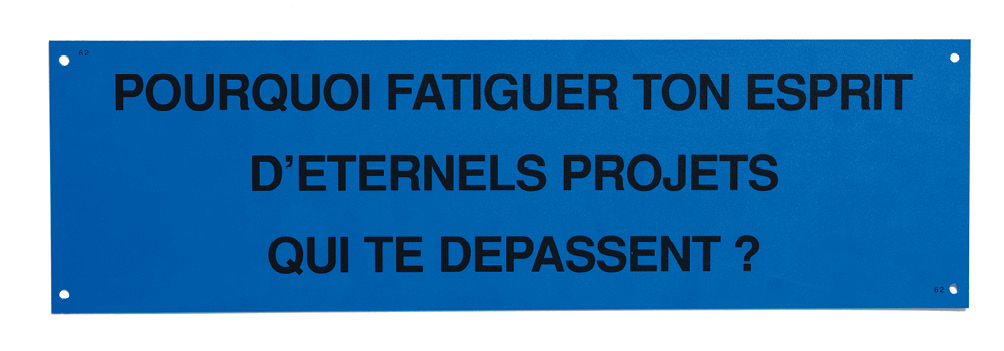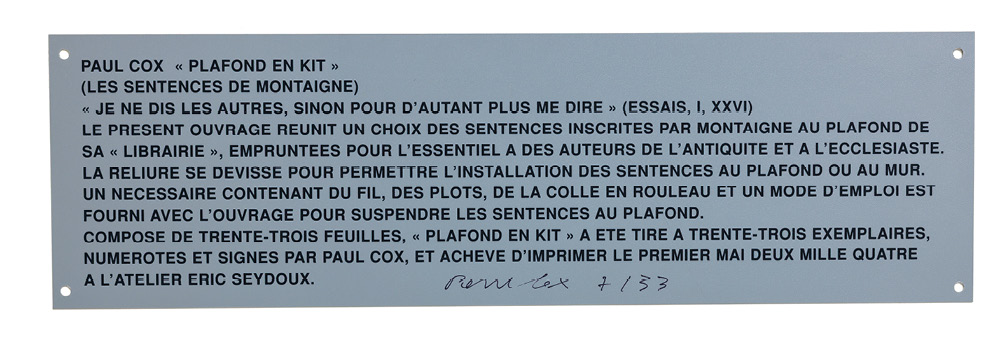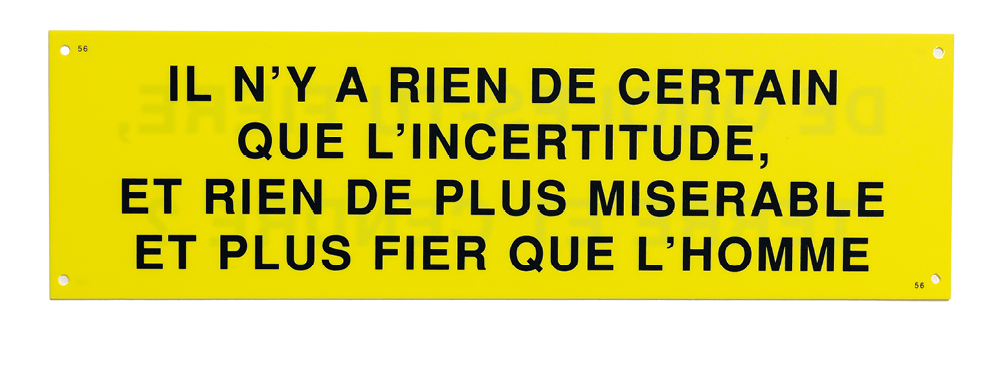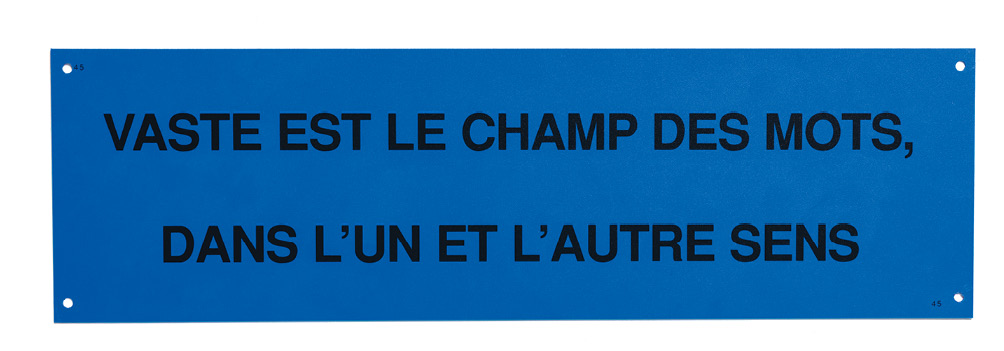
I used to live 500 meters away from Éric Seydoux’s Atelier on the rue de l’Abbé-Carton (I liked this name which recalls a printing surface!) in the 14th arrondissement. I’d ring the bell, the grey door would open, and there would be Éric, slim and elegant with his wonderful smile and his warm “Hello!” Inside, there was the calm atmosphere of the studio, spacious enough for a press as long as a boat; there were cans of ink, screens, squeegees arranged like Japanese swords, tools (paintbrushes, spatulas or clips), the handles of which had all been painted a beautiful blue, and next to the door of the toilets there was the antique Jurine paper cutter, which always led to a joke. Éric enjoyed jokes, even rather lame ones–and I can still hear his distinctive laugh. Perhaps he laughed at the worst of them only out of courtesy, given that he was courteous to the extreme. He never spoke much, and his discrete nature added to his charm. When examining a freshly printed proof, the most satisfac-tion I ever heard him express was: “It’s not too bad.” We could then be sure that he was delighted with what he saw and that the result was perfect.
He was an absolute perfectionist. I remember that he’d decided to entirely redo the complex printing of my Rotoprints, having judged the first run to be of insufficient quality.
I owe him a great deal. Each one of his invitations to come up with a new edition was a huge encouragement for me. As a young artist in my early days with him, I was impressed to see the works of Shirley Jaffe, Buraglio, Viallat, Cuzin, Frédérique Lucien, and so many others that I admired at his workshop. And when Éric told me that as a young teenager in New